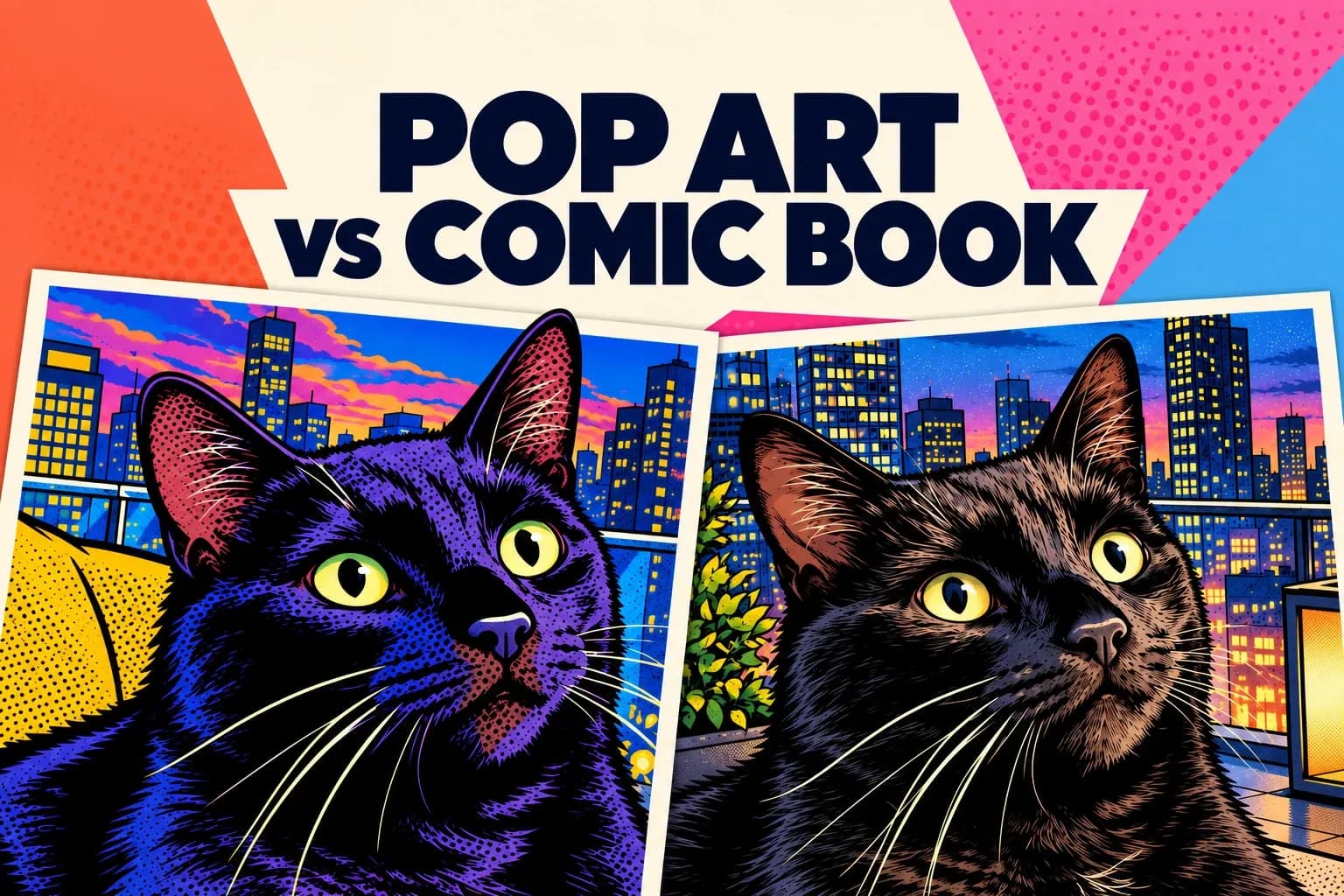
Chunk looks mildly offended in both portraits. We’d use the blue-purple Pop Art version for a profile picture and save Comic Cover for the moment we find a caption worthy of that stare. Both styles use the bold outlines and printed dots you might expect from a comic.
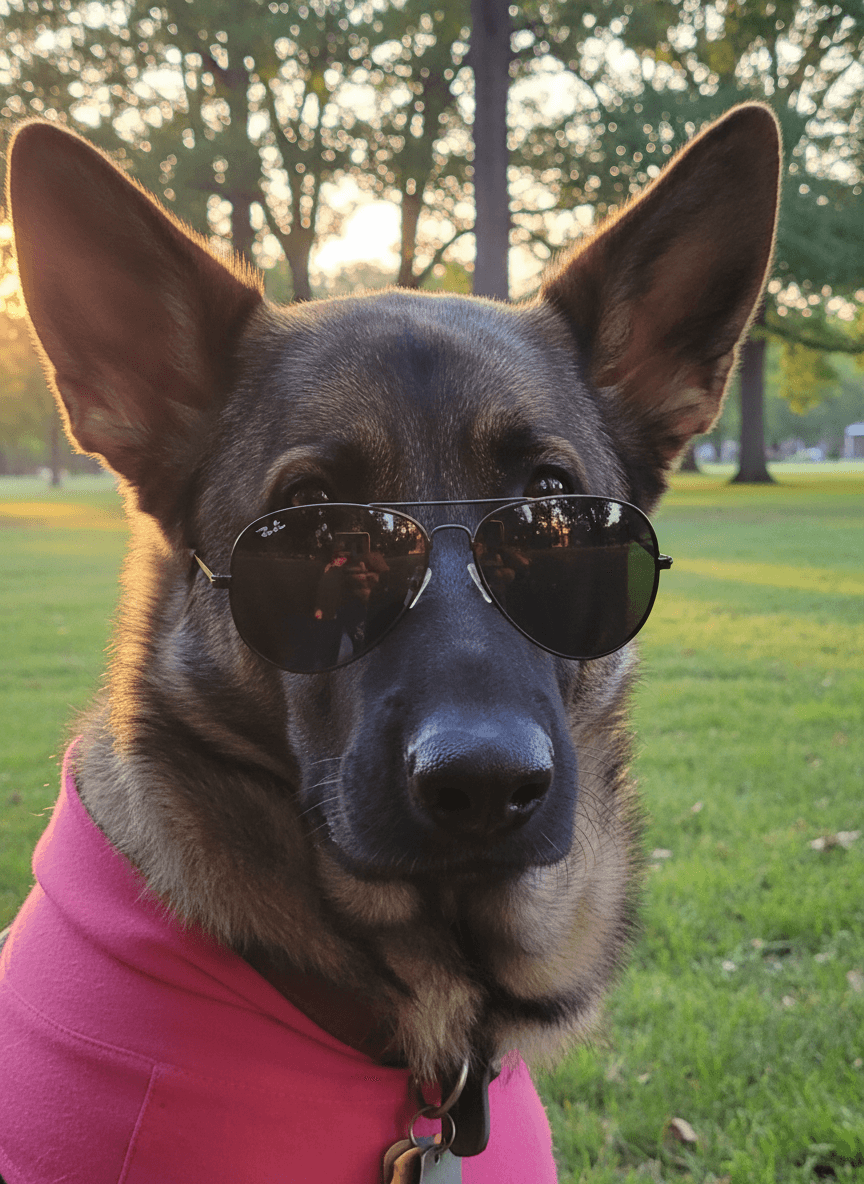
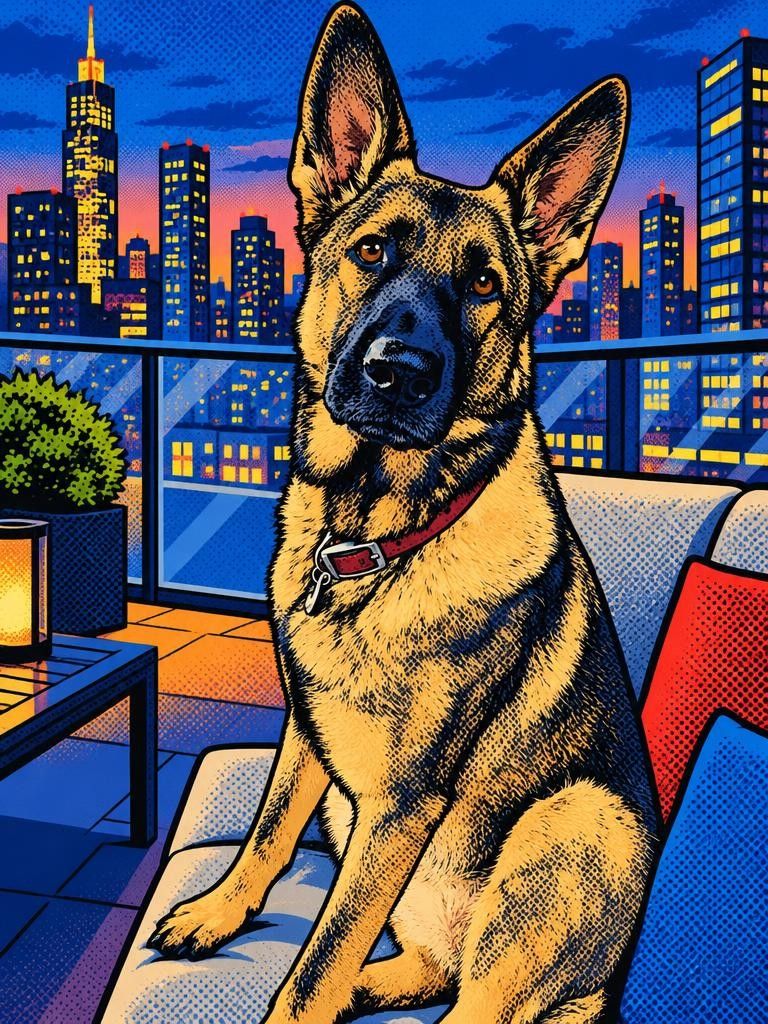
The same three source photos went into both galleries, with City Skyline, Creative Mode On and no added accessory.
Pop Art and comic-book pet portrait examples
Pop Art
Example 1 of 3: Chunk
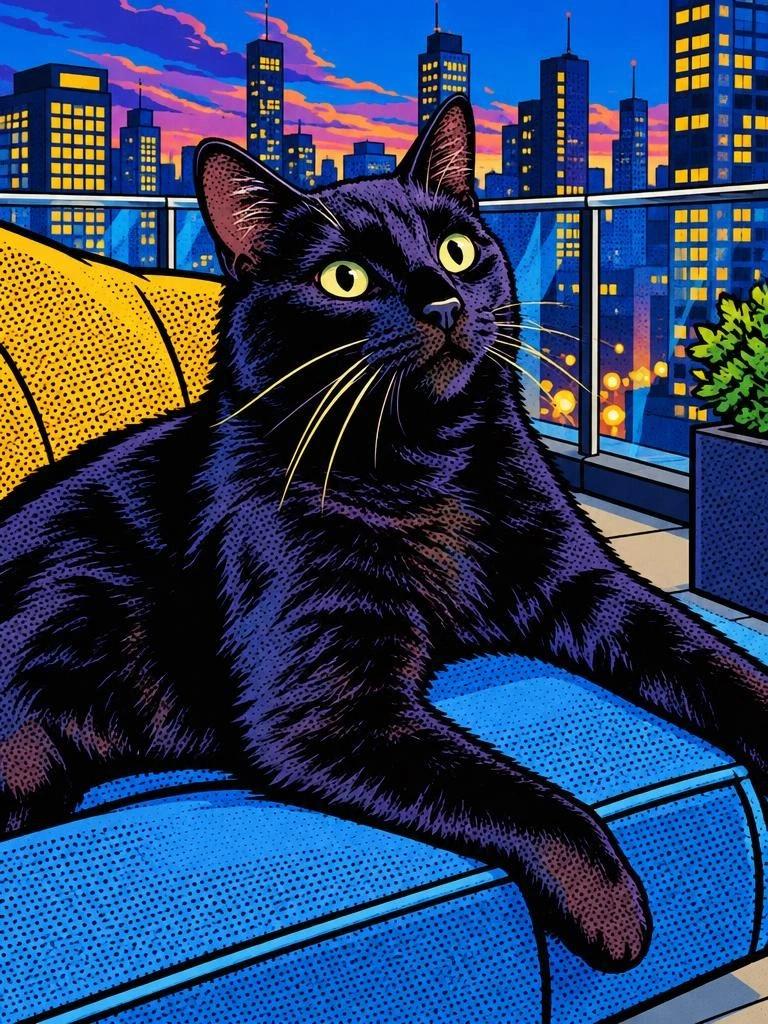
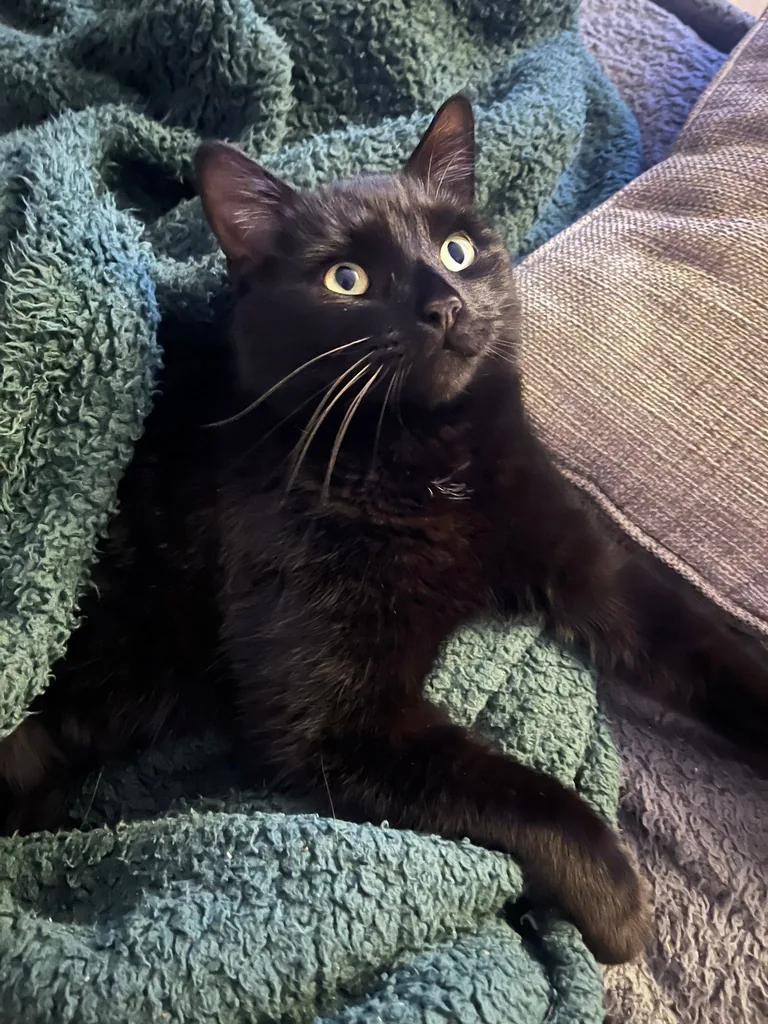


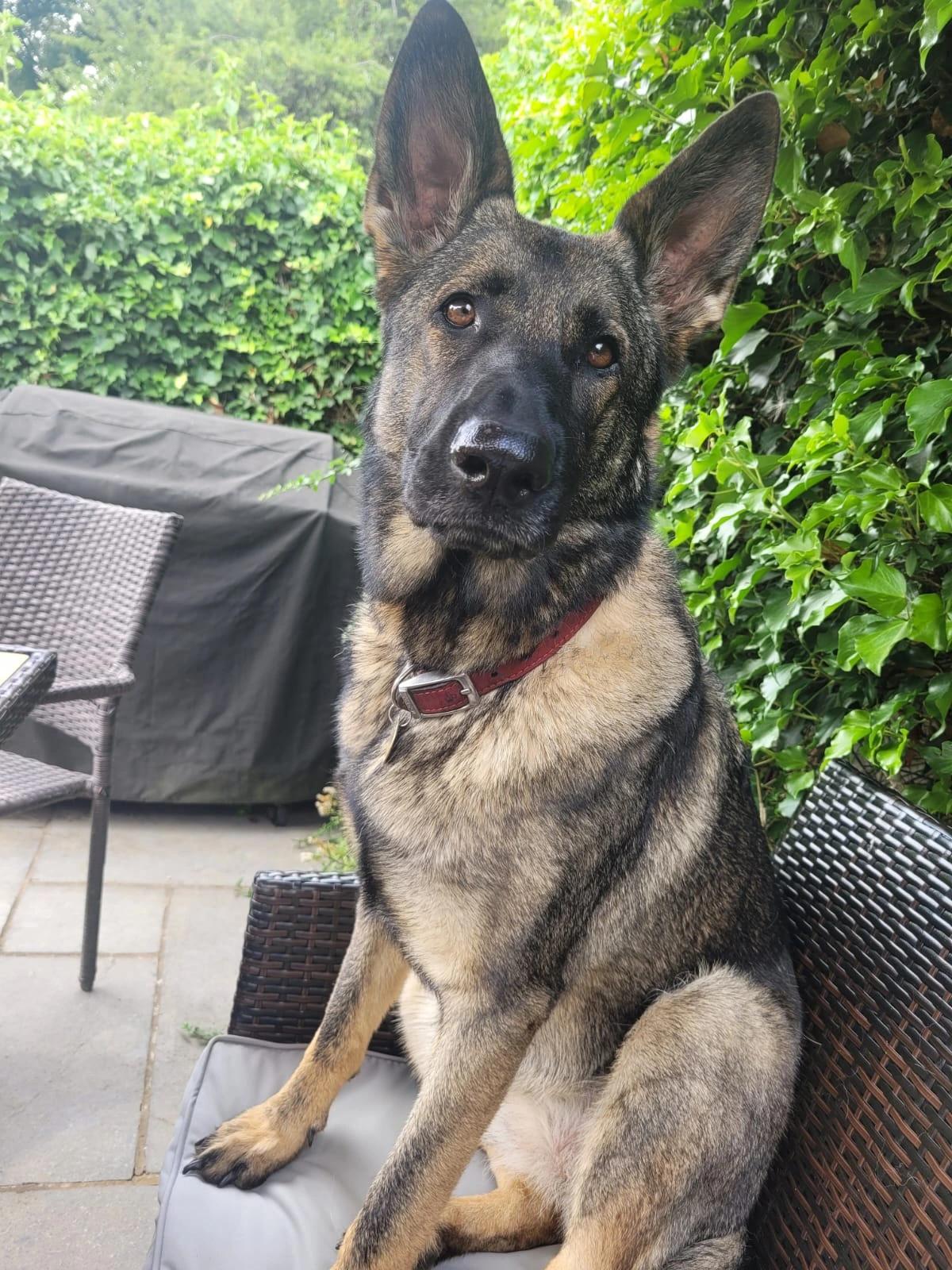
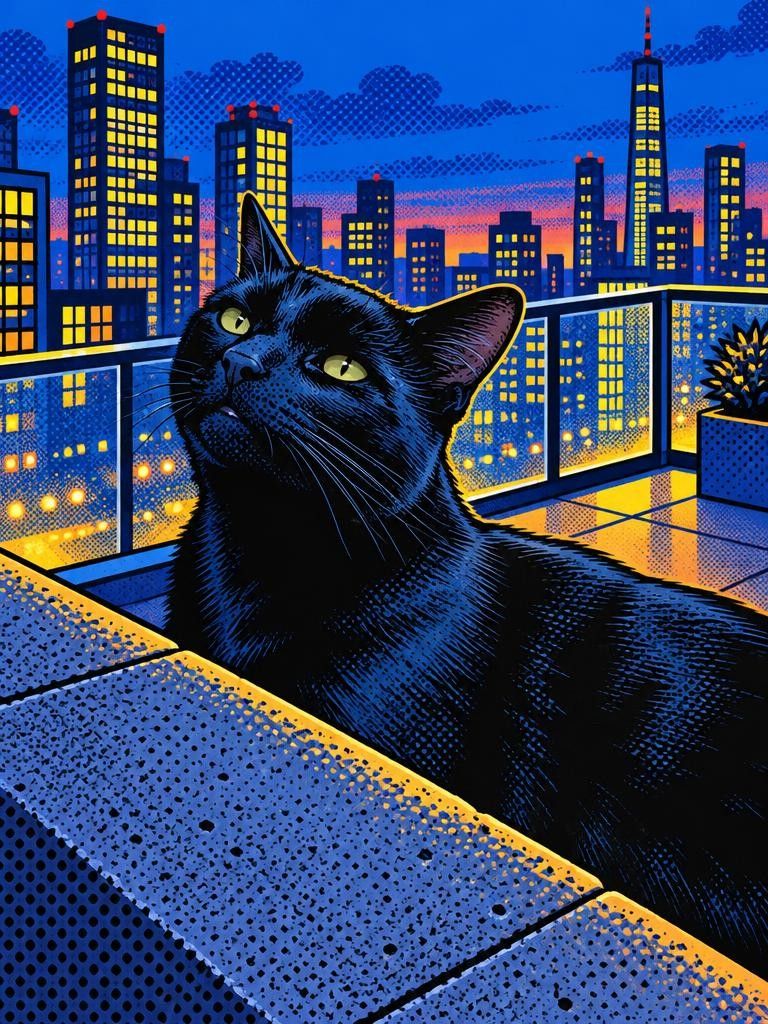
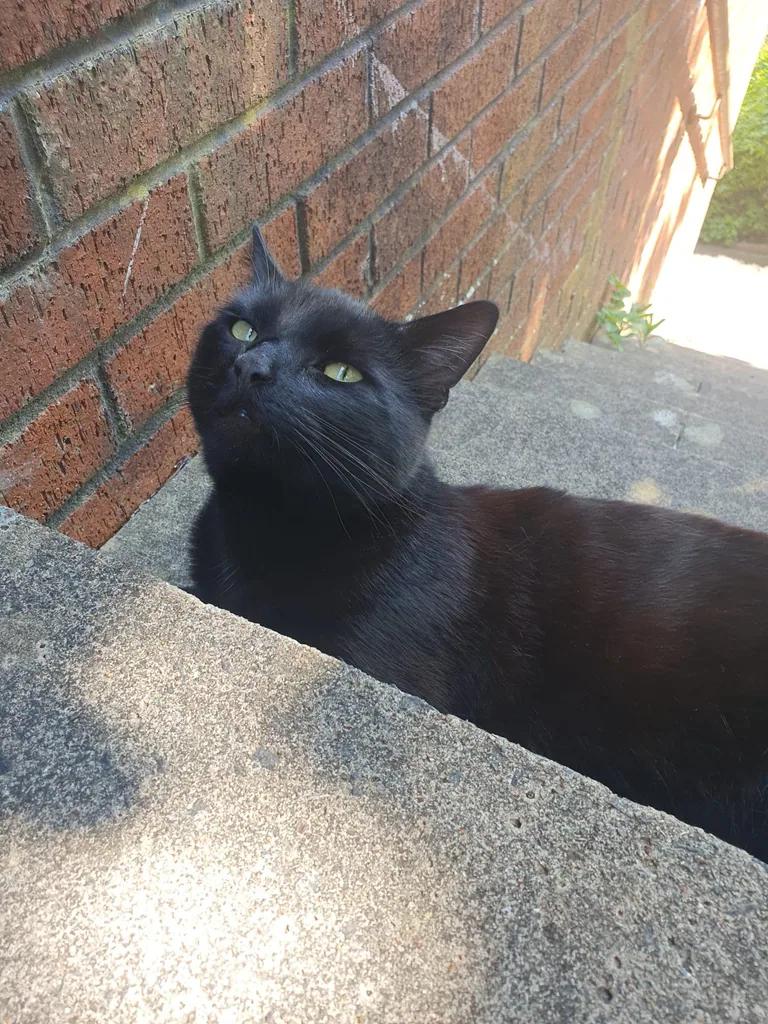
Pop Art is a good fit when you want the portrait to carry the colour in a design. We’d give this one a plain border and let Chunk be the bright bit.
Comic Cover
Example 1 of 3: Chunk
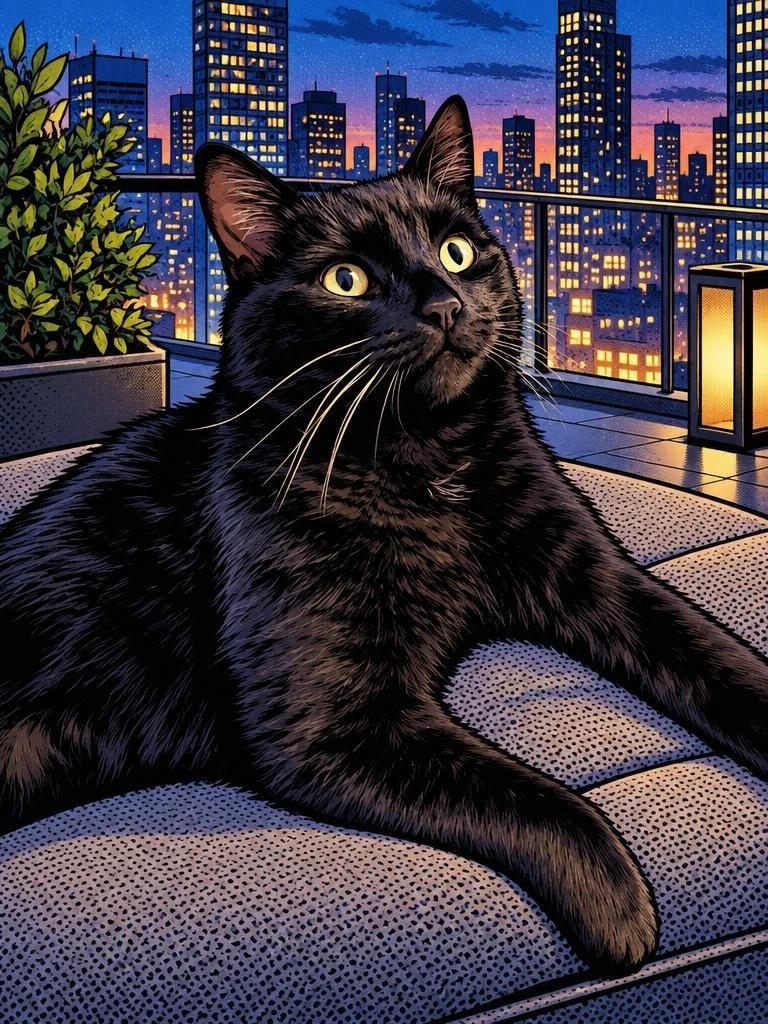

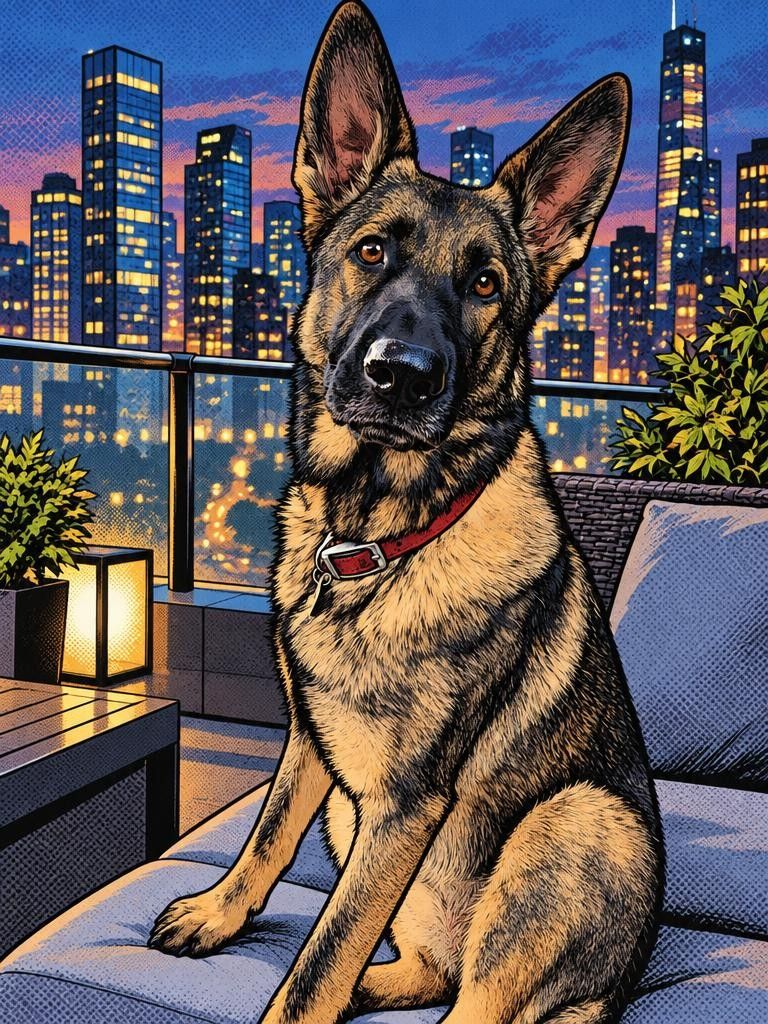
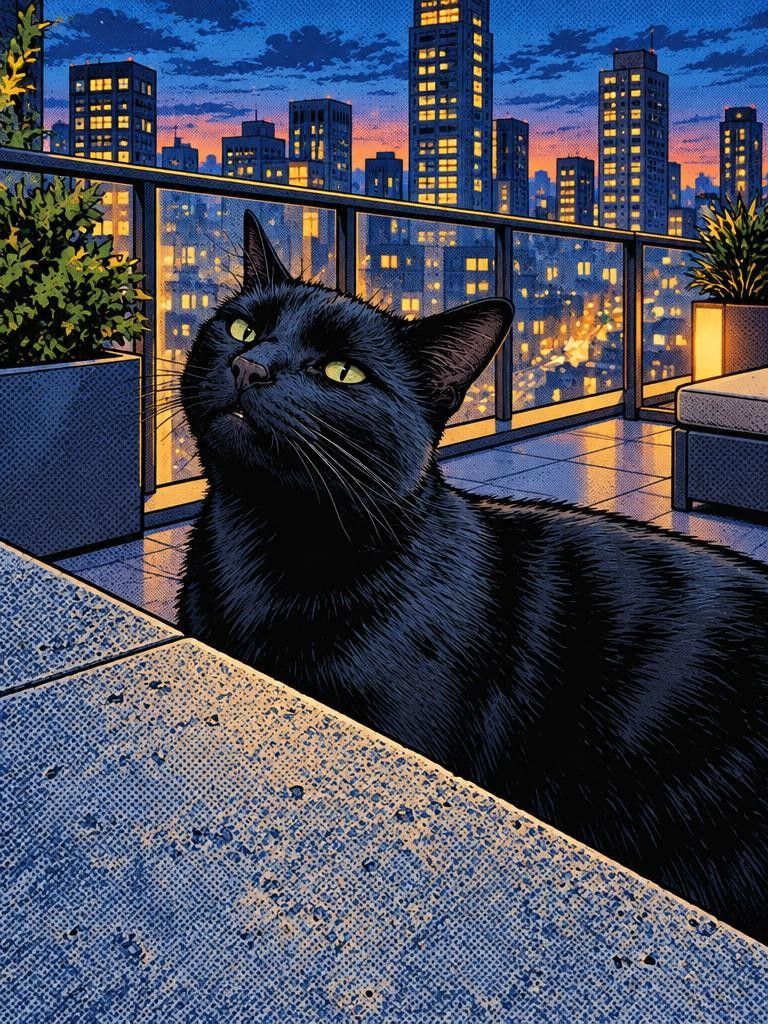
For a homemade comic panel, we’d go with Comic Cover. Chunk’s coat stays closer to its original colours, which helps sell the idea that this is him caught in the middle of a scene.
Why the two looks can overlap
Pop Art drew on commercial imagery, including comics and advertising. The Roy Lichtenstein Foundation biography describes early Pop paintings based on comic strips and advertising, with the appearance of printing processes.
A one-panel joke for Chunk
“Reserved seating” would suit Chunk. Put the words in a text box in your design editor after you download the portrait. That way you can nudge the caption out of the way of his paws and fix any spelling without making another image.
More examples: Pop Art pet portrait generator, comic-book pet portrait generator. The pet portrait style guide covers other art styles.
Browse Pop Art examples or use the choices beneath a result to try the same combination.
Explore graphic pet portraitsFrequently Asked Questions
Does Comic Cover make a whole comic book?
Comic Cover creates a single portrait. A multi-page comic or book layout is a separate design project.
Related Articles